
 English
 Spanish
Plants You Shouldn’t Put in Direct Sunlight (and What to Plant Instead)
Posted On: jul 28, 2026
Categories: Mary´s Advice
Plants You Shouldn’t Put in Direct Sunlight (and What to Plant Instead)
Have you ever noticed brown patches appearing on the leaves of your plants?
They may look as though they are drying out… even though that cannot be the problem because you always remember to water them.
If that sounds familiar, it may not be a watering problem at all. Your plants may be getting scorched by the sun.
Plants need light, of course, but many of them — more than we sometimes realise — cannot tolerate direct sunlight.
That is why in this post we are going to look at which plants prefer shade and which alternatives you can choose for the sunnier areas of your terrace or garden.
Let’s get started!
Plants You Shouldn’t Put in Direct Sunlight
Hydrangeas
Hydrangeas love light… but preferably indirect light.
Direct sunlight, particularly in very hot areas, can scorch both their flowers and leaves.
Ideally, grow them in partial shade. If they do receive direct sun, it is better for this to be during the early morning or late afternoon.
They also appreciate soil rich in organic matter and frequent watering to keep the soil fresh and moist.
>> Click here to buy hydrangeas.
Ferns
Ferns naturally grow beneath trees and in humid woodland environments.
They are therefore accustomed to being protected from direct sunlight and growing in relatively humid conditions.
If you place them in a very sunny area, the edges of their leaves may begin to dry out, lose colour and eventually look dull and unhealthy.
A bright position protected from direct sunlight will help them maintain their characteristic lush green foliage.
>> Click here to buy ferns.
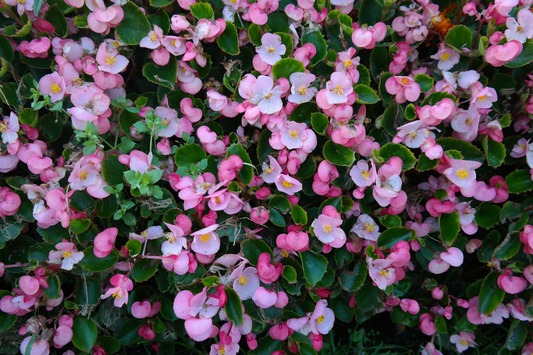
Begonias
Begonias are valued for both their flowers and their attractive foliage, although both are quite sensitive to excessive sunlight.
Prolonged exposure can cause leaf scorch and significantly reduce flowering.
The best option is to place them in partial shade or somewhere that receives filtered light for much of the day.
With regular watering and a substrate that retains moisture well, they will grow much more vigorously.
>> Click here to buy begonias.
Calatheas
Calatheas are tropical plants highly appreciated for the beautiful patterns on their leaves.
In their natural habitat, they grow beneath taller vegetation and receive very little direct sunlight.
When exposed to too much intense light, their leaves begin to lose colour and brown patches can appear around the edges.
A bright indoor room or a protected corner of the garden will be much more suitable for them.
>> Click here to buy calatheas.
Impatiens
Impatiens produce abundant flowers for much of the year, provided they are grown under the right conditions.
Strong summer sun can scorch their leaves and shorten the lifespan of their flowers.
For this reason, they usually perform better on patios, porches and partially shaded areas where they receive plenty of light without being constantly exposed to direct sunlight.
Be careful not to confuse them with their cousins, SunPatiens. These do enjoy sunny conditions, although they should still be protected during the hottest hours of summer.
>> Click here to buy impatiens.
What to Plant Instead in Very Sunny Areas
Lavender
Lavender is an extremely versatile plant that adapts well to many environments.
It loves direct sunlight and copes very well with high temperatures.
It is also a very hardy plant that requires little maintenance. The most important thing is to provide a well-drained substrate so that water does not accumulate around the roots.
And as an added bonus… it smells wonderful!
>> Click here to buy lavender.
Gazania
Gazania is made for sunny gardens.
When it receives several hours of direct sunlight each day, its flowering becomes even more abundant.
You only have to look at the way its flowers open when sunlight reaches them and close again at night to see how much this plant loves the sun.
>> Click here to buy gazanias.
Rosemary
Like lavender, rosemary is a shrubby plant that grows naturally in Mediterranean landscapes, making it highly adaptable.
It tolerates direct sunlight extremely well — in fact, it loves it — and requires very little water.
Its biggest enemy is actually overwatering and poorly drained soil, as this can cause the roots to rot.
You can plant rosemary in a pot and simply cut off a sprig whenever you want to use it in cooking.
Its fragrance also attracts bees and other pollinating insects. Plenty of advantages!
>> Click here to buy rosemary.
Lantana
Lantana produces small flowers grouped together in very attractive clusters.
It adapts very well to warm climates and can even tolerate direct summer sunlight.
That is precisely why it is so widely used in Mediterranean gardens.
>> Click here to buy lantanas.
Dimorphotheca
Dimorphotheca produces abundant flowers throughout spring and much of summer.
Not only does it tolerate direct sunlight, but the more hours of light it receives, the more flowers it tends to produce, with brighter and more vibrant petals.
Once well established, it also tolerates drought quite well, making it a very interesting choice for low-maintenance gardens.
>> Click here to buy dimorphothecas.
Always Choose the Right Plant for Each Part of Your Garden
We hope this guide helps you choose the best plants for each area of your home.
If you still have any questions, you can get in touch with us.
At Viveros González, we have been advising our customers for many years and can help you choose the perfect plant according to your particular needs.
See you very soon!