
 English
 Spanish
Chinch Bugs in Lawns: How to Identify and Control Them
.jpg)
Over the past few days, your lawn has started to lose its colour, with more and more yellow and dry patches appearing.
At first, you may have thought it needed more water or perhaps a little fertiliser… until you noticed tiny insects like these moving among the blades of grass:
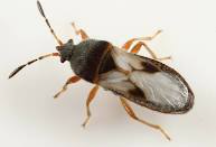
This small insect is known as the chinch bug, and if it has invaded your lawn, you are one of many garden owners currently being affected by this pest.
The chinch bug is an invasive pest that is spreading across southern Spain and causing serious damage to gardens and lawn areas.
That is why, at Viveros González, we have prepared this article to explain everything you need to know about this invasive insect:
- What exactly the chinch bug is and why it appears.
- What signs indicate that it is affecting your garden.
- How to control it and stop it from spreading.
Let’s get started.
The chinch bug: a new threat to your lawn
Before talking about treatments, let’s take a closer look at this small invader.
What is the chinch bug?
The chinch bug is a small insect belonging to the Blissus genus that feeds on the sap of lawn grass.
It usually hides near the base of the grass blades and within the thatch layer — the layer of dead leaves, stems and organic plant material that accumulates on the soil surface.
From there, chinch bugs suck the sap from the grass, gradually weakening it.
During the warmer months, they can also reproduce very quickly.
Their life cycle consists of three stages: egg, nymph and adult. In warm temperatures, this cycle can be completed in around five to six weeks, allowing several generations to develop between spring and autumn.
Why do chinch bugs appear?
Certain conditions greatly favour their development.
Chinch bugs thrive particularly well in dry lawns exposed to high temperatures.
For this reason, it is especially important to keep an eye on your lawn during summer, when the grass may be under stress due to heat and lack of water.
An excessive build-up of thatch can also encourage an infestation.
This layer of dry organic material provides an ideal shelter at the base of the grass, where chinch bugs can hide and lay their eggs.
Signs that chinch bugs have invaded your lawn
The main warning sign is the appearance of yellow patches in the grass.
As the infestation progresses, these areas lose strength, turn brown and may eventually become completely dry.
In addition, the affected patches gradually increase in size as chinch bugs move towards the healthy green grass around them.
To confirm whether chinch bugs are responsible, inspect the base of the grass blades and the thatch layer around the affected areas.
Adult chinch bugs are approximately 4 to 6 mm long and usually have dark bodies with lighter-coloured wings.
Nymphs are much smaller and, during their early stages, have a distinctive reddish or orange colour.
Detecting them early will allow you to act before the infestation spreads throughout your garden.
How to control chinch bugs in your lawn
Now that we have covered the basics, let’s move on to the most practical part of this article: what can you do if chinch bugs have invaded your lawn?
These are the steps you should follow to control them.
1. Mow the lawn and remove dry debris
Start by mowing the lawn and thoroughly removing all grass clippings and dry material.
Remember that chinch bugs tend to remain close to the base of the grass stems. Reducing the height of the lawn will help the insecticide reach the areas where they are hiding.
It is also important to remove excess thatch.
If a thick layer has developed, you can scarify the lawn to remove some of the accumulated organic matter and expose the areas where the insects are sheltering.
2. Apply a suitable insecticide
The next step is to apply an insecticide suitable for use on lawns, always following the manufacturer’s instructions carefully.
There are both liquid and granular treatments available, and their application methods differ.
- Liquid products are sprayed over the lawn to reach the areas where the chinch bugs are present.
- Granular products are spread evenly over the surface and usually require watering afterwards to activate the product and help it reach the base of the grass stems.
If temperatures are very high, apply the treatment early in the morning or late in the afternoon.
3. Treat the areas surrounding the damaged patches
This is an important point.
Chinch bugs move from areas that are already damaged towards the surrounding healthy green grass.
For this reason, when applying the treatment, make sure you also treat the edges around the yellow or dry patches.
This will help target the insects that are moving towards other areas of the garden.
4. Manage watering properly to help the lawn recover
Grass weakened by heat and lack of water is much more vulnerable to this type of pest.
During the warmer months, try to maintain an appropriate watering routine with deep, less frequent watering so that moisture reaches the roots properly.
You should also take into account the type of insecticide you are using.
Granular treatments generally need water after application to activate them, while liquid treatments may require different conditions.
Always check the product label to know exactly when and how you should water your lawn.
Having problems with chinch bugs? We can help
Chinch bugs are becoming an increasingly common problem in gardens across southern Spain.
If you have noticed yellow patches or dry areas in your lawn and suspect that this pest may be responsible, Viveros González can help.
Tell us what symptoms you have noticed and we will advise you on the most suitable treatment.
We can help you keep your lawn green, strong and healthy.