 English
 Spanish
- New

 Encrypted payments for greater security
To reduce the plant's time in transit, shipments are made from Monday to Wednesday.


Shipping only to mainland Spain and mainland Portugal
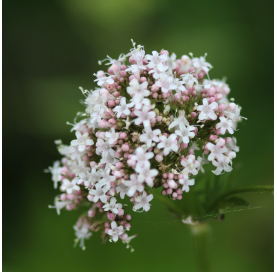
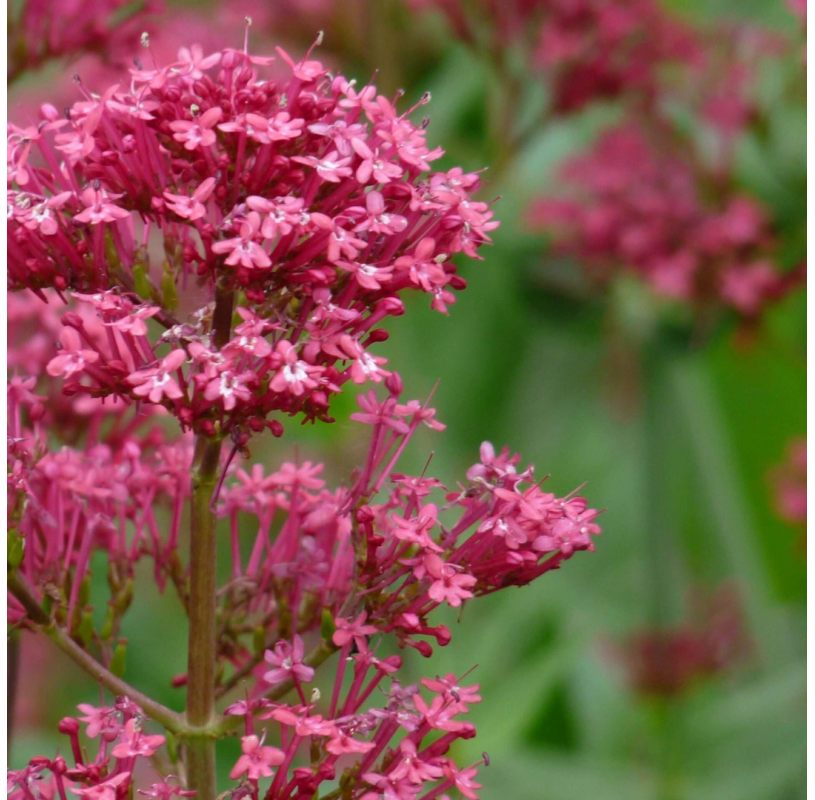
Centranthus ruber ‘Coccineus Red’, commonly known as red valerian, is a perennial plant highly valued for its abundant flowering and its light, natural appearance. It forms branched clumps with an upright habit, grey-green leaves, and clusters of small flowers in a vivid deep red or crimson shade. It is widely used in Mediterranean-style gardens, rock gardens, walls, and more natural-looking planting schemes.
Centranthus ruber is native to the Mediterranean region, where it grows naturally in dry, stony, and sunny ground. It is very well adapted to warm climates and poor soils.
It has long been used in gardening because of its hardiness, its ability to flower for many months, and its ease of naturalising in different settings. It is often seen growing even in wall crevices or on slopes, which has contributed to its reputation as a rustic and very rewarding plant.
It is a hardy and easy plant to maintain.
Watering should be moderate to low.
Pruning is simple and helps encourage a longer flowering season.
One of the most interesting qualities of Centranthus ruber is how easily it attracts bees and butterflies. It also tends to self-seed quite readily in suitable places, allowing it to spread naturally through the garden.