
 English
 Spanish
- New
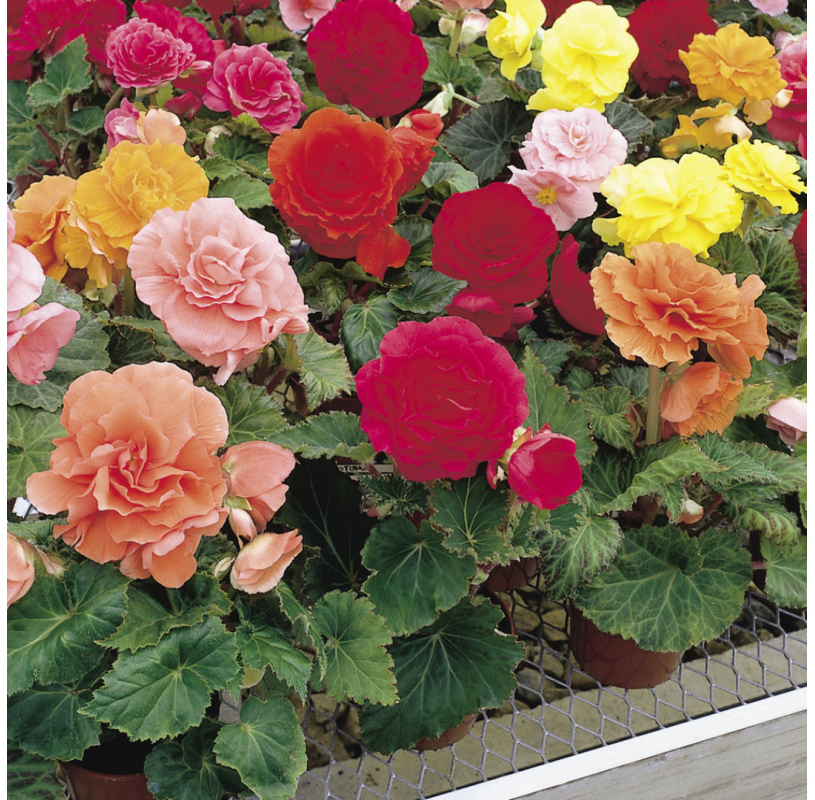

Begonia × tuberhybrida is an ornamental plant prized for its large, colourful flowers and long blooming season, from spring through autumn. Its compact habit makes it ideal for pots, planters, balconies and shaded or partially shaded gardens. It thrives in moist, well-drained soil and bright indirect light.
 Encrypted payments for greater security
To reduce the plant's time in transit, shipments are made from Monday to Wednesday.


Shipping only to mainland Spain and mainland Portugal
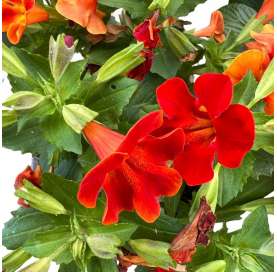
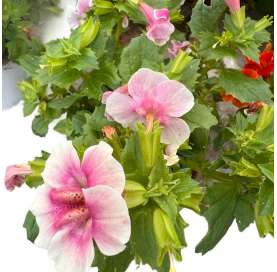
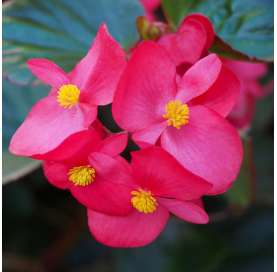
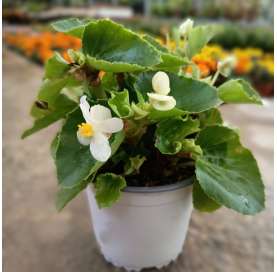
Begonia × tuberhybrida is an ornamental plant highly valued for its large, showy flowers in vivid colours. Depending on the variety, the flowers may be single, semi-double, or double, in shades such as white, pink, red, yellow, orange, or bicolour combinations. Its leaves are usually green, fleshy, and slightly asymmetrical, and its habit may be upright or trailing. It is widely used in pots, planters, balconies, and bright corners protected from strong direct sun.
Begonia × tuberhybrida is a group of ornamental hybrids developed from several tuberous begonia species native to South America, especially Andean regions.
Tuberous begonias became very popular in gardening because of the large size and beauty of their flowers. Over time, many hybrids were developed to create more colours, shapes, and growth habits, giving rise to the Begonia × tuberhybrida group, which is widely used both outdoors in sheltered spaces and on patios and terraces.
It is a very decorative plant, but it does need suitable conditions to perform well.
Watering should be moderate and regular.
Pruning is simple and mainly for maintenance.
One of the most interesting qualities of Begonia × tuberhybrida is the spectacular appearance of its flowers, which can look almost like florist blooms because of their size and colour. Many trailing varieties are also especially popular for creating a full and elegant effect on balconies and terraces.




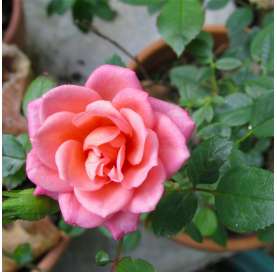
Begonia × tuberhybrida is an ornamental plant prized for its large, colourful flowers and long blooming season, from spring through autumn. Its compact habit makes it ideal for pots, planters, balconies and shaded or partially shaded gardens. It thrives in moist, well-drained soil and bright indirect light.