

Description
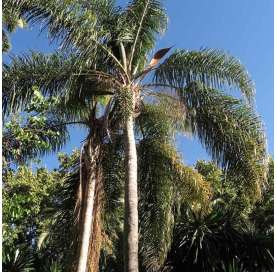
The Queen Palm, botanically known as Syagrus romanzoffiana (formerly Arecastrum romanzoffianum), is an elegant and fast-growing palm tree. It features a single, smooth, slender trunk topped with a crown of long, arching, feather-like fronds in a rich green color. Its tropical appearance makes it very popular in gardens, avenues, and poolside areas.
Origin
It is native to South America, particularly Brazil, Argentina, Paraguay, and Uruguay. It naturally grows in warm, humid regions but adapts well to Mediterranean climates.
History
For many years, it was commonly referred to as Arecastrum romanzoffianum, but its accepted botanical name today is Syagrus romanzoffiana. It has become one of the most widely used ornamental palms in coastal and urban landscaping due to its adaptability, fast growth, and striking appearance.
Curiosity
One interesting feature is its production of clusters of bright orange fruits when mature. Its soft, flowing fronds give it a lighter and more relaxed look compared to other palms—hence the name “plumose” or feather-like. It instantly adds a tropical feel to any space.
Care
This is a low-maintenance and resilient palm once established.
It requires full sun or very bright light. It prefers fertile, well-drained soils but can tolerate a variety of soil types.
Ideal for large gardens, lining pathways, or as a standalone specimen. Regular feeding during spring and summer helps maintain healthy growth and vibrant foliage.
Watering
It needs regular watering during the first years, especially in warm seasons.
Once established, it becomes more drought-tolerant, although it looks best with consistent moderate watering.
Avoid waterlogging, as excess moisture can damage the roots.
Pruning
Pruning should be minimal.
Only remove dry, damaged, or fully mature leaves. Avoid cutting green fronds, as they are essential for the palm’s health.
Fruit clusters can also be removed if a cleaner appearance is desired.
English
Spanish