
 English
 Spanish
- New

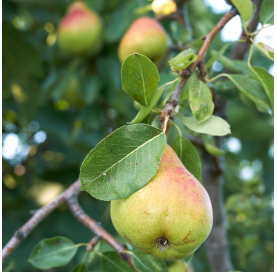
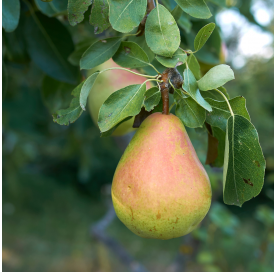
The pear tree (Pyrus communis) is a fruit tree valued for its white blossom and pear production in many varieties. It has an elegant shape and suits both orchards and larger gardens. It grows best in full sun and benefits from regular watering and pruning to encourage healthy growth and fruiting.
 Encrypted payments for greater security
To reduce the plant's time in transit, shipments are made from Monday to Wednesday.


Shipping only to mainland Spain and mainland Portugal
The pear tree is a deciduous fruit tree highly valued for its fruit, the pear. It has an elegant habit, usually upright when young and becoming more rounded over time, with green oval leaves and a very attractive spring flowering display. Its flowers are usually white and appear before or together with the leaves. The fruits then develop and can vary in size, shape, colour, and flavour depending on the variety.
The pear tree, especially Pyrus communis, originated in Europe and western Asia. It has been cultivated for centuries in many temperate regions of the world because of the value of its fruit and its good adaptability to different growing conditions.
The pear tree has been cultivated since ancient times and has long been valued in orchards and gardens. Over time, many varieties have been selected for their flavour, texture, storage quality, and climate adaptability. As a result, there are now many different types of pears, both for fresh eating and for other uses.
It is a hardy fruit tree, although it needs suitable conditions to produce well.
Watering should be moderate and regular.
Pruning is important to keep the tree balanced and productive.
One interesting fact about the pear tree is that it can live for many years and produce abundant harvests when properly cared for. Its spring blossoms also have strong ornamental value, so it is appreciated not only for its fruit but also for the beauty it brings to the garden or orchard.


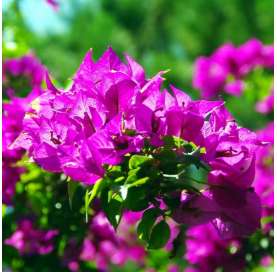
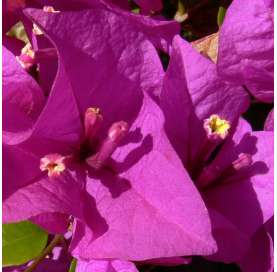





The pear tree (Pyrus communis) is a fruit tree valued for its white blossom and pear production in many varieties. It has an elegant shape and suits both orchards and larger gardens. It grows best in full sun and benefits from regular watering and pruning to encourage healthy growth and fruiting.