
 English
 Spanish
- New

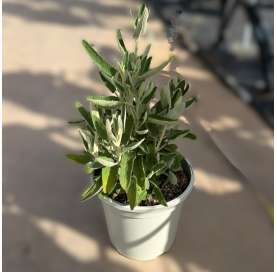

Phlomis purpurea is a Mediterranean shrub valued for its whorls of purple flowers and attractive grey-green foliage. It is highly tolerant of sun, wind and drought, making it ideal for Mediterranean gardens, rockeries and low-maintenance landscapes. It also attracts pollinators and provides year-round structure.
 Encrypted payments for greater security
To reduce the plant's time in transit, shipments are made from Monday to Wednesday.


Shipping only to mainland Spain and mainland Portugal
Phlomis purpurea is an evergreen ornamental shrub valued for its natural habit, grey-green foliage, and flowering in shades of pinkish purple or mauve. Its leaves are elongated, slightly rough, and softly textured, while the flowers appear in whorled tiers around the stems, creating a very distinctive structure. It is widely used in Mediterranean gardens, low-maintenance landscapes, and dry planting schemes.
Phlomis purpurea is native to the western Mediterranean region, especially the Iberian Peninsula and North Africa, where it grows naturally in sunny, dry, and stony ground.
Over time, this plant has become highly valued in gardening for its hardiness, its wild and natural appearance, and its ability to adapt to difficult conditions. It is especially common in Mediterranean-style gardens because of its good response to heat, its unusual flowering, and the ornamental interest it keeps even after the blooming season.
It is a hardy and easy plant to maintain when grown in suitable conditions.
Light: needs full sun.
Soil: prefers well-drained soil, even if it is poor, stony, or chalky.
Position: ideal for Mediterranean gardens, rockeries, slopes, borders, and dry areas.
Resistance: once established, it tolerates heat, drought, and tough conditions very well.
Watering should be low to moderate.
During the establishment period, it benefits from slightly more regular watering.
Once settled, it tolerates lack of water very well.
It is important to avoid waterlogging.
Pruning is simple and mainly for maintenance.
Dry flower heads can be removed after flowering.
Dry or untidy branches should also be cut back.
A light trim helps keep the plant more compact and tidy.
One of the most interesting qualities of Phlomis purpurea is that it keeps a strong ornamental value even when it is no longer in flower, thanks to the shape of its stems and the structure of its dried flower heads. It also fits beautifully into natural and Mediterranean-style gardens because of its resilience and authentic appearance.






Phlomis purpurea is a Mediterranean shrub valued for its whorls of purple flowers and attractive grey-green foliage. It is highly tolerant of sun, wind and drought, making it ideal for Mediterranean gardens, rockeries and low-maintenance landscapes. It also attracts pollinators and provides year-round structure.