
 English
 Spanish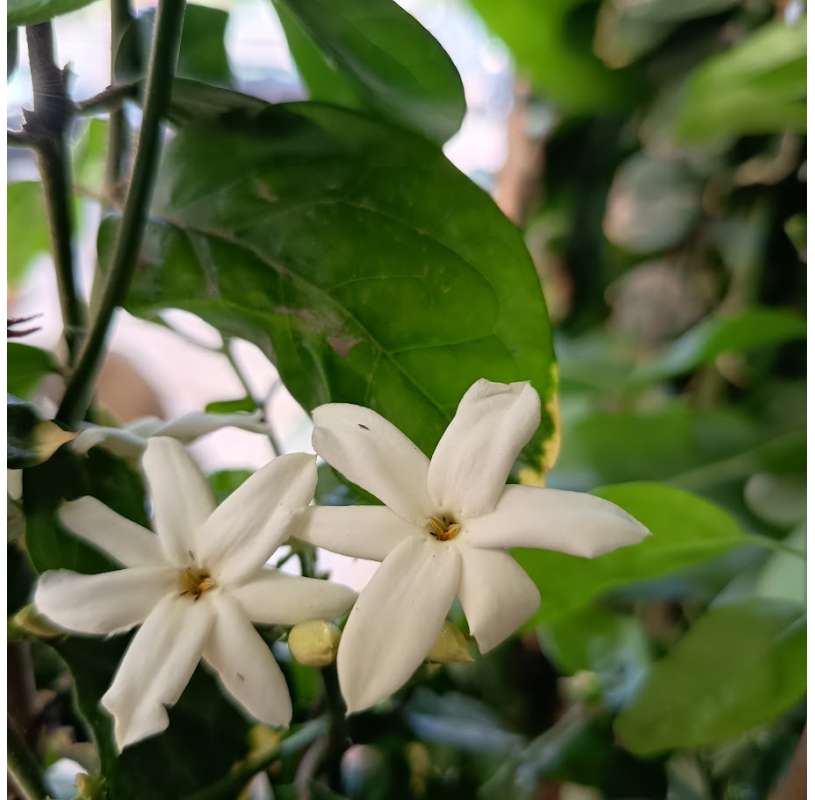
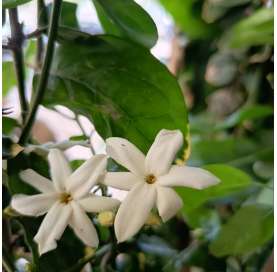
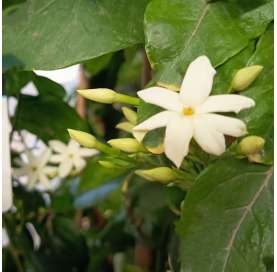
It is a plant famous for the perfume of its white flowers, grouped in corymbiform cymes. They are large, white and very fragrant.
 Encrypted payments for greater security
To reduce the plant's time in transit, shipments are made from Monday to Wednesday.


Shipping only to mainland Spain and mainland Portugal
Description
Jasminum sambac, commonly known as Arabian Jasmine, is a climbing or shrubby plant from the Oleaceae family. It is renowned for its small, fragrant white flowers, often used in perfumery and for making aromatic teas. The flowers are tubular in shape and bloom throughout the year in warm climates.
Origin
Arabian Jasmine is native to South and Southeast Asia, including India, Sri Lanka, Myanmar, and the Philippines.
History
Arabian Jasmine has been cultivated for centuries in Asia for its fragrant flowers and its use in religious and cultural ceremonies. In India, the flowers are used in garlands and as temple offerings. In the Philippines, it is the national flower and is known as "Sampaguita." Its popularity has spread to other parts of the world, including the Middle East and the Mediterranean.
Care
Arabian Jasmine requires a location with good sunlight exposure, though it can tolerate some partial shade. It prefers well-drained soil rich in organic matter. It is sensitive to low temperatures, so in colder climates, it is recommended to grow it in pots to protect it during winter.
Watering
Watering should be regular but moderate. It is important to keep the soil moist but not waterlogged. During the growing season, watering frequency can be increased, while in winter, it should be reduced.
Pruning
Pruning Arabian Jasmine is done to maintain its shape and encourage denser growth. It is best to prune after the main flowering period. Dead, damaged, or weak branches should be removed, as well as spent flowers, to stimulate new blooms.
#### Curiosities
- Arabian Jasmine is the national flower of the Philippines and is used in making jasmine tea in China.
- The flowers of Arabian Jasmine are edible and can be used to flavor beverages and desserts.
- In perfumery, the essential oil from Jasminum sambac flowers is highly valued for its intense and exotic aroma.
Jasminum sambac is not only a beautiful and fragrant plant but also has a rich cultural history and various practical uses. With proper care, it can be a wonderful addition to any garden or indoor space.






It is a plant famous for the perfume of its white flowers, grouped in corymbiform cymes. They are large, white and very fragrant.