
 English
 Spanish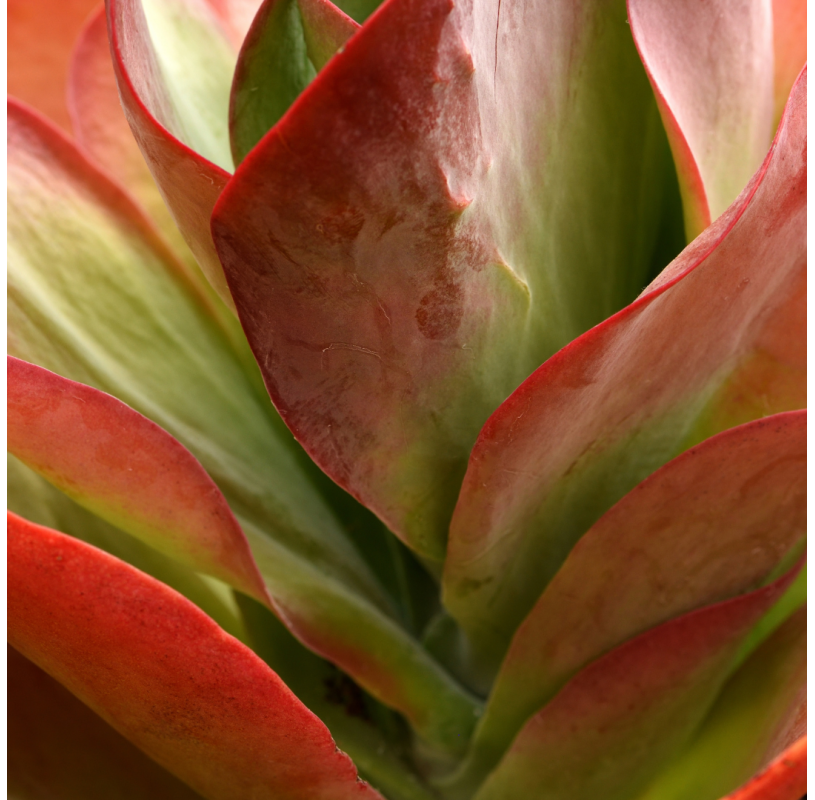
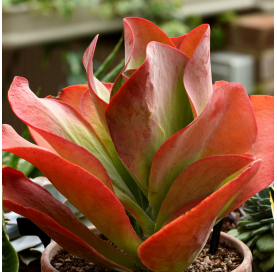
Kalanchoe luciae, also known as "Paddle Plant," is a succulent native to southern Africa, renowned for its fleshy leaves that change color with sunlight. It is a low-maintenance plant, perfect for indoors and outdoors, needing bright light, moderate watering, and occasional pruning.
 Encrypted payments for greater security
To reduce the plant's time in transit, shipments are made from Monday to Wednesday.


Shipping only to mainland Spain and mainland Portugal
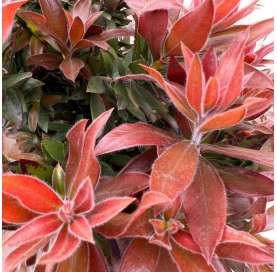
Kalanchoe luciae, commonly known as "Paddle Plant" or "Flapjacks," is a succulent plant belonging to the Crassulaceae family. It is characterized by its large, flat, fleshy leaves arranged in a rosette pattern. The leaves are light green, often turning reddish or purplish at the edges when exposed to direct sunlight, especially during winter. In spring, it produces an inflorescence with small tubular flowers that are pale yellow or white.
Kalanchoe luciae is native to the semi-arid regions of southern Africa, particularly in countries like South Africa, Eswatini, and Mozambique. It thrives in rocky, arid terrains and has adapted to extreme conditions by storing water in its leaves.
Discovered in the 19th century, Kalanchoe luciae has gained popularity in gardening and interior decoration for its striking appearance and low-maintenance requirements. It is often confused with its close relative, Kalanchoe thyrsiflora, but can be distinguished by its thinner leaves and more vibrant coloration.







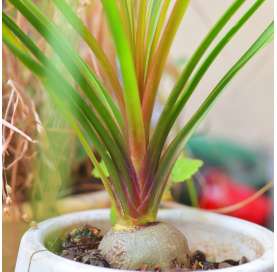
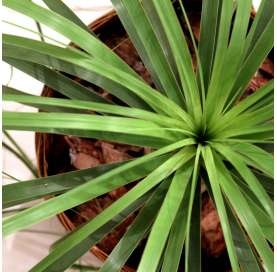
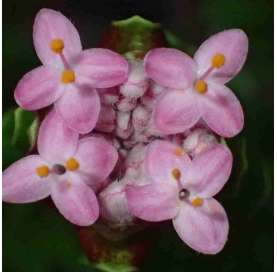

Kalanchoe luciae, also known as "Paddle Plant," is a succulent native to southern Africa, renowned for its fleshy leaves that change color with sunlight. It is a low-maintenance plant, perfect for indoors and outdoors, needing bright light, moderate watering, and occasional pruning.