

Frambueso
The raspberry plant (Rubus idaeus) is a perennial shrub from the Rosaceae family, native to Europe and western Asia. It produces juicy, nutritious fruits, thrives in well-drained soil, and requires regular watering. Proper pruning enhances fruit production.

Encrypted payments for greater security
To reduce the plant's time in transit, shipments are made from Monday to Wednesday.

Shipping only to mainland Spain and mainland Portugal
Raspberry (Rubus idaeus)
Description
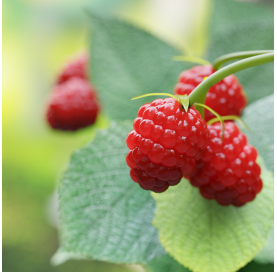
The raspberry plant is a perennial shrub from the Rosaceae family, known for its delicious red fruits. It is a vigorous-growing plant with semi-woody, thorny stems that can reach between 1.5 and 2.5 meters in height. Its leaves are compound with a whitish underside, and its small white flowers appear in spring, producing the characteristic fruits in summer and autumn, depending on the variety.
Origin and History
The raspberry plant originates from Europe and western Asia, where it grows wild in forests and meadows. Its scientific name, Rubus idaeus, refers to Mount Ida in Crete, where, according to Greek mythology, raspberries were first discovered. Cultivated since ancient times for its flavor and medicinal properties, it has spread worldwide over the centuries.
Curiosities
- In the Middle Ages, raspberries were used not only as food but also as a dye for fabrics due to their intense red color.
- It is highly valued by pollinators, especially bees, which help improve fruit production.
- Raspberries are not technically individual fruits but rather an aggregate of small drupelets clustered on the same receptacle.
Care
- Location: Prefers temperate climates and well-ventilated areas. It thrives best in partial shade or full sun in regions that are not excessively hot.
- Soil: Requires well-drained, nutrient-rich soil with a slightly acidic pH (between 5.5 and 6.5).
- Fertilization: Applying compost or organic fertilizer in spring and after harvest improves fruit production.
Watering
- Raspberry plants need regular watering to keep the soil moist but not waterlogged.
- During flowering and fruiting, increasing watering frequency is essential to obtain juicy fruits.
- In summer, mulching around the base is recommended to retain moisture and reduce excessive evaporation.
Pruning
- Remove dry or weak stems at the end of winter to encourage new growth.
- In remontant varieties, pruning the stems that have already fruited helps stimulate new production.
- For non-remontant varieties, cut the stems that have borne fruit down to the base after harvest.
The raspberry plant is an excellent addition to gardens and orchards, providing delicious fruits and a natural touch with its green foliage and delicate white flowers.
Data sheet
- Name
- Rubus idaeus (Raspberry)
- Origen
- Temperate Europe and Asia
- Height
- 1.5 to 2 m
- Colour
- Light green leaves; deep red fruits when ripe
- Flowering
- Spring – small white or pink flowers
- Location
- Full sun or partial shade; prefers cool areas
- Irrigation
- Regular – keep soil consistently moist but not waterlogged
- Sowing distance
- 40–60 cm between plants, 1.5 m between rows
- Applications
- Home gardens, edible landscaping, pots or in-ground growing
- Note
- Easy to grow and very productive. Prefers well-drained, rich, slightly acidic soil. Support with stakes or trellises is recommended.
- Poda
- Cut back fruiting canes to the ground after harvest. Keep new shoots for next season.
12 other products in the same category:
-
-
Persian lime - Citrus x...€63.00
-
-
-
-
-
-
Aeonium arboreum.€0.00
-
-
-
-
English
Spanish