 English
 Spanish
- New
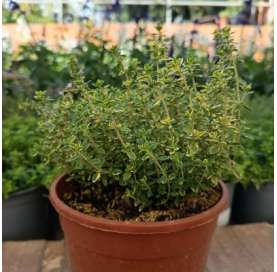
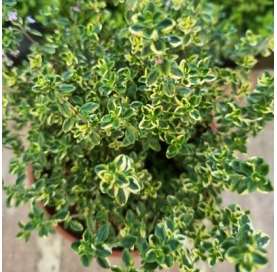
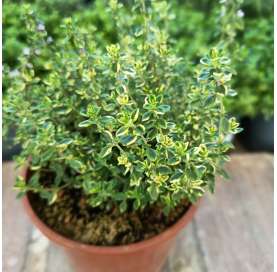
Lemon thyme is an aromatic plant valued for its fresh citrus fragrance. It has a low, compact habit and works well in pots, borders, rock gardens and Mediterranean-style planting. It needs full sun, well-drained soil and moderate watering.
 Encrypted payments for greater security
To reduce the plant's time in transit, shipments are made from Monday to Wednesday.


Shipping only to mainland Spain and mainland Portugal
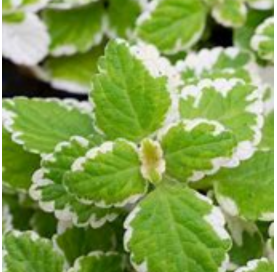
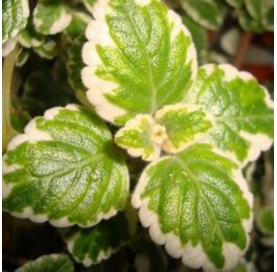
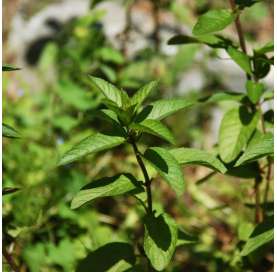
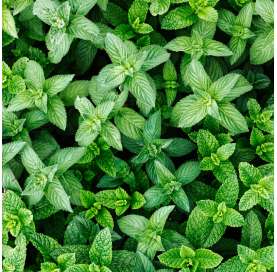
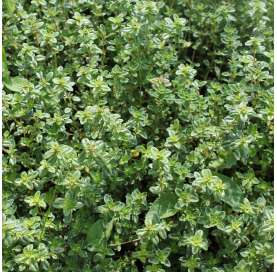
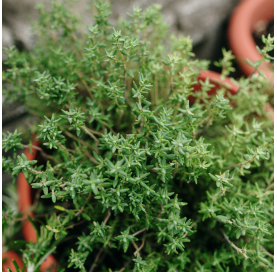
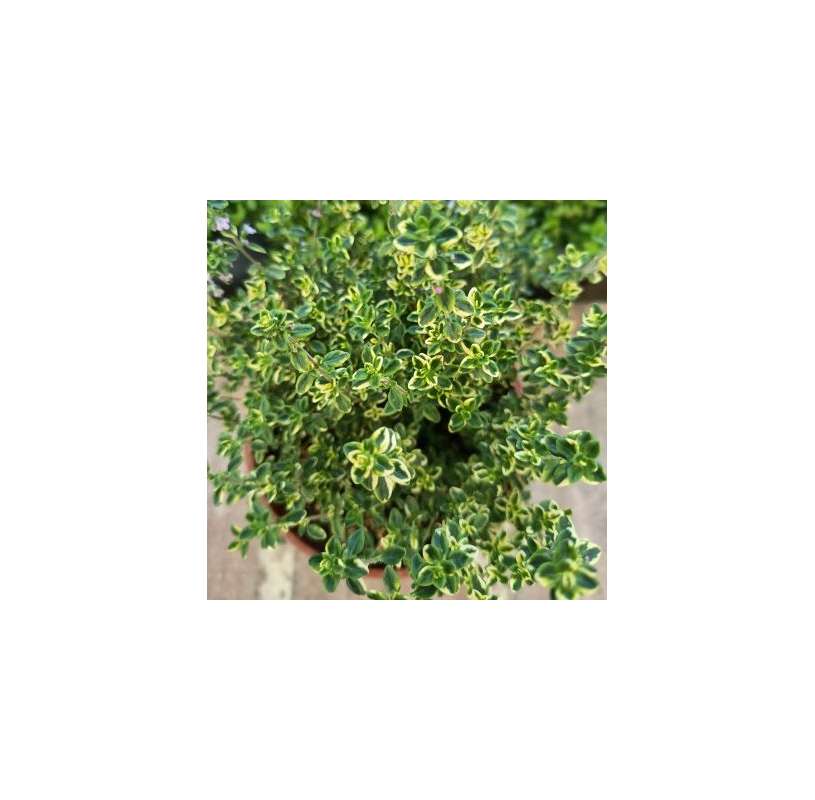
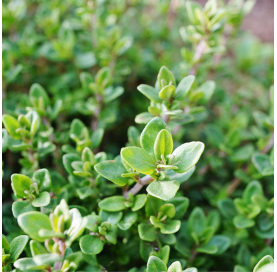
Lemon thyme is a perennial aromatic plant with a compact, low-growing habit, highly valued for its pleasant citrus fragrance. Its leaves are small, oval, and green, sometimes with golden or variegated tones depending on the variety. It forms dense, neat mounds and, during the flowering season, produces small flowers in shades of pink, lilac, or whitish tones. It is widely used both in gardening and in cooking.
Lemon thyme, Thymus × citriodorus, is a horticultural hybrid related to Mediterranean species of the Thymus genus. Although it is not a wild species in the strict sense, its botanical background is linked to the European Mediterranean region.
Over time, lemon thyme has become very popular because it combines the ornamental and culinary qualities of thyme with a fresher, more citrus-like fragrance. It has been grown for many years in herb gardens, kitchen gardens, and pots because of its usefulness and the decorative value of its foliage.
It is a hardy and easy plant to maintain.
Watering should be moderate to low.
Pruning is simple and recommended to keep the plant compact.
One of the most interesting qualities of lemon thyme is its fragrance, which clearly recalls lemon while still keeping the typical background aroma of thyme. For this reason, it is widely used both in cooking and in herb gardens, where it adds scent, texture, and a very natural appearance.
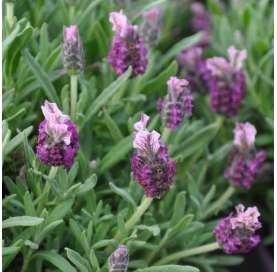
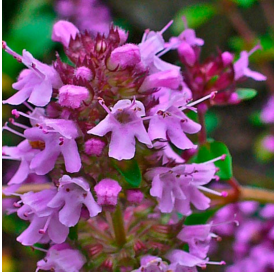
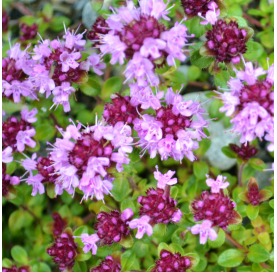
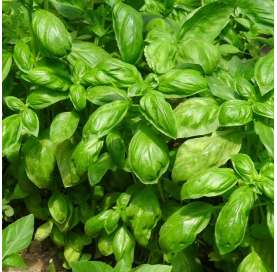
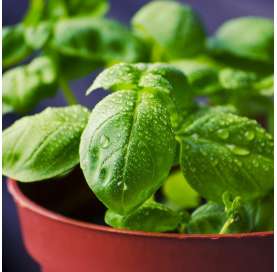
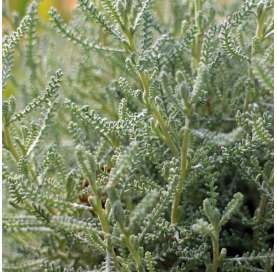
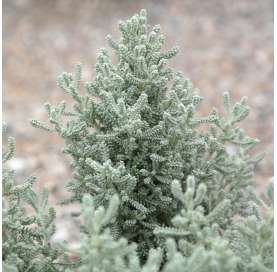
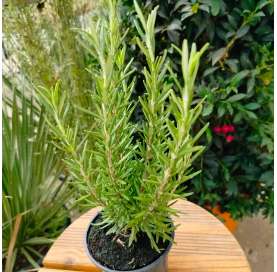
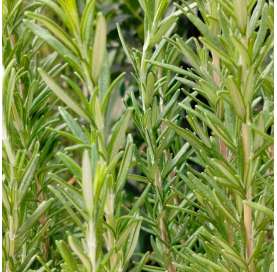
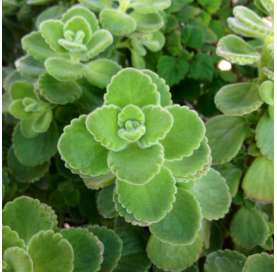
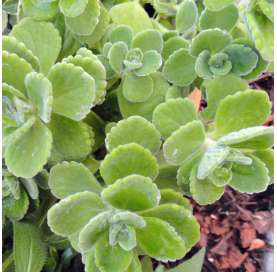
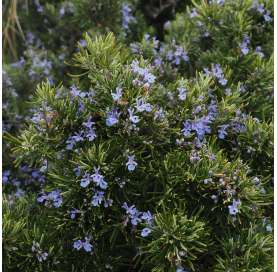
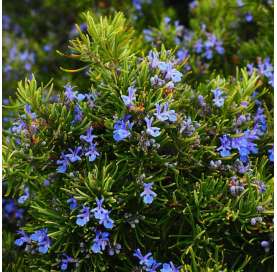
Lemon thyme is an aromatic plant valued for its fresh citrus fragrance. It has a low, compact habit and works well in pots, borders, rock gardens and Mediterranean-style planting. It needs full sun, well-drained soil and moderate watering.