

Arandano
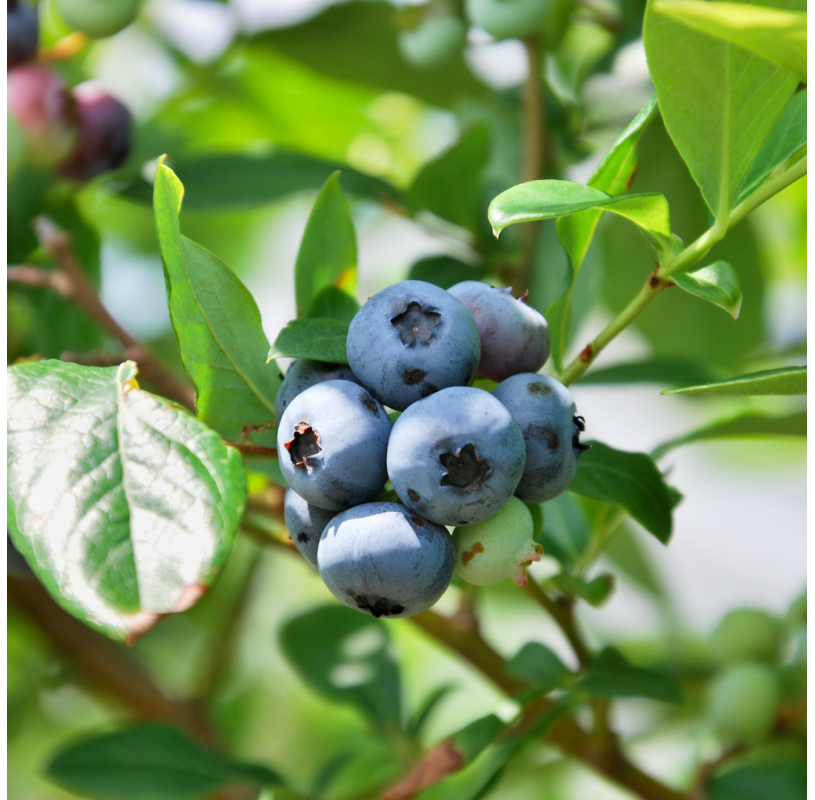
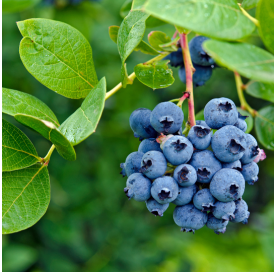
The blueberry (Vaccinium corymbosum) is a deciduous fruit shrub native to North America. It produces antioxidant-rich blue berries and thrives in well-drained, acidic soils. It requires full sun, frequent watering, and regular pruning for optimal fruit production.

Encrypted payments for greater security
To reduce the plant's time in transit, shipments are made from Monday to Wednesday.

Shipping only to mainland Spain and mainland Portugal
Blueberry (Vaccinium corymbosum)
Description
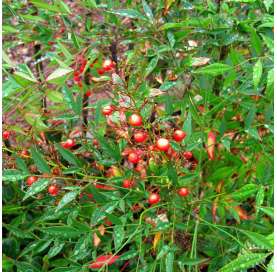
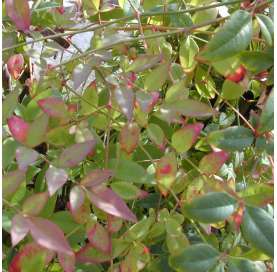
The blueberry is a deciduous fruit shrub from the Ericaceae family, known for its small, bluish berries with a sweet and slightly tart flavor. It can grow between 1 and 2.5 meters tall, with oval-shaped, deep green leaves that turn reddish in autumn. Its white or pink flowers bloom in clusters during spring, and the fruits ripen in summer.
Origin and History
The blueberry is native to North America, where it thrives in moist forests and acidic soils. Indigenous peoples consumed it for centuries, both fresh and dried, due to its high nutritional and medicinal value. With the arrival of European settlers, its cultivation expanded, and in the early 20th century, improved varieties were developed for commercial farming. Today, it is one of the most popular fruits worldwide due to its high antioxidant content.
Curiosities
- Blueberries are one of the most antioxidant-rich fruits, making them a great ally for health.
- Some indigenous cultures used blueberries as a natural dye for textiles and as a remedy for urinary infections.
- The taste and texture vary by species; highbush blueberries (Vaccinium corymbosum) are larger and sweeter, while lowbush varieties (Vaccinium angustifolium) are smaller and more tart.
Care
- Location: Prefers temperate and cool climates, with winter chill periods that support growth. Requires full sun for optimal fruit production.
- Soil: Needs acidic soils (pH between 4.5 and 5.5), rich in organic matter and well-drained. Using soil mixes designed for acid-loving plants is recommended.
- Fertilization: Organic fertilizers or specific fertilizers for acidophilic plants should be applied in spring and after harvest.
Watering
- Requires frequent watering, especially during growth and fruiting seasons.
- The soil should remain moist but not waterlogged, as blueberries are sensitive to excess moisture.
- Mulching with pine bark or pine needles helps retain moisture and maintain soil acidity.
Pruning
- In the first few years, weak or diseased branches should be removed to strengthen the plant’s structure.
- From the third or fourth year, renewal pruning is necessary, cutting back older branches to stimulate fruit production.
- Pruning should be done in late winter or early spring before new growth begins.
The blueberry is an excellent addition to gardens and home orchards, providing both nutritious fruit and seasonal beauty with its changing foliage.
Data sheet
- Name
- Vaccinium corymbosum (Blueberry)
- Origen
- North America
- Height
- 1 to 1.8 m
- Colour
- Dark green leaves; bluish fruits with juicy flesh
- Flowering
- Spring – small bell-shaped flowers, white or pink
- Location
- Full sun or partial shade; sheltered from wind
- Irrigation
- Frequent – needs consistently moist soil, never waterlogged
- Sowing distance
- 80–100 cm between plants
- Applications
- Home gardens, large pots, edible landscaping
- Note
- Requires acidic soil (pH 4.5–5.5), rich in organic matter and well-drained. Use peat moss or specific acidic plant substrate.
- Poda
- Prune annually after harvest to remove old canes and promote new growth. Keep an open shape.
12 other products in the same category:
-
-
-
-
-
-
HERTIA C13€3.60
-
-
-
-
-
-
English
Spanish