
 English
 Spanish
- New

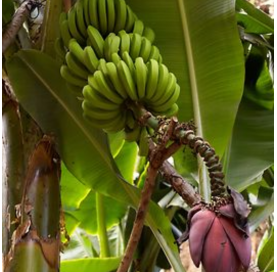

Musa acuminata, commonly known as the Canary banana plant, is valued for its large leaves and bold tropical appearance. It adds volume and impact to gardens and terraces. It requires full sun, regular watering and protection from wind to keep its foliage in good condition. Ideal for creating lush, tropical-style spaces.
 Encrypted payments for greater security
To reduce the plant's time in transit, shipments are made from Monday to Wednesday.


Shipping only to mainland Spain and mainland Portugal
Musa acuminata, commonly referred to in gardening as the Canary banana plant, is a tropical plant valued both for its ornamental appearance and its fruit. Although it is often mistaken for a tree, it is actually a large herbaceous plant with a pseudostem formed by the tightly wrapped bases of its leaves. Its leaves are large, elongated, and bright green, giving it a lush, exotic look. In the right conditions, it can produce clusters of fruit and bring a very tropical character to gardens and spacious terraces.
Musa acuminata is native to Southeast Asia and Australasia. Many of today’s cultivated bananas and plantains have been developed from this species. In ornamental gardening, the so-called Canary banana plant is often associated with cultivated forms adapted to mild climates.
This species is one of the most important ancestors of modern edible bananas. Over time, Musa acuminata has played a key role in the development of many cultivated varieties, both for food production and ornamental use. In mild-climate areas such as the Canary Islands and some coastal regions, it has also become a very recognisable plant because of its lush appearance.
It is a striking and fast-growing plant when grown in suitable conditions.
Watering should be regular and abundant, especially in warm weather.
Pruning is simple and mainly focused on maintenance.
One very interesting fact is that the banana plant is not a true tree, even though it may look like one because of its size. Its “trunk” is actually a pseudostem made up of overlapping leaf bases. Also, many modern bananas are largely descended from Musa acuminata.

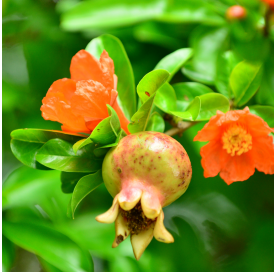
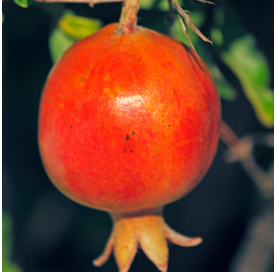
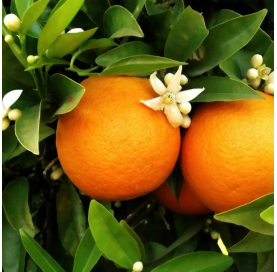



Musa acuminata, commonly known as the Canary banana plant, is valued for its large leaves and bold tropical appearance. It adds volume and impact to gardens and terraces. It requires full sun, regular watering and protection from wind to keep its foliage in good condition. Ideal for creating lush, tropical-style spaces.